Managing Your Rheumatoid Arthritis
What Is Rheumatoid Arthritis?
Rheumatoid arthritis (RA) is an autoimmune disease that causes inflammation, which leads to joint swelling and chronic joint pain. While your smaller joints tend to be affected first at the onset of the disease, RA symptoms often spread to other parts of the body as the disease progresses. RA also tends to affect joints in symmetrical patterns; in other words, if one knee or hand is affected, the other one usually is too.
About 40% of people with RA also experience signs and symptoms that don’t involve the joints. Other parts of the body, including the skin, eyes, lungs, heart, and blood vessels, can also be affected.
The exact causes of RA are unknown, but it is thought to develop from a combination of genetic and environmental factors.
Common Symptoms of Rheumatoid Arthritis:
- Joint pain
- Tender, warm, swollen joints
- Morning stiffness
- Fatigue
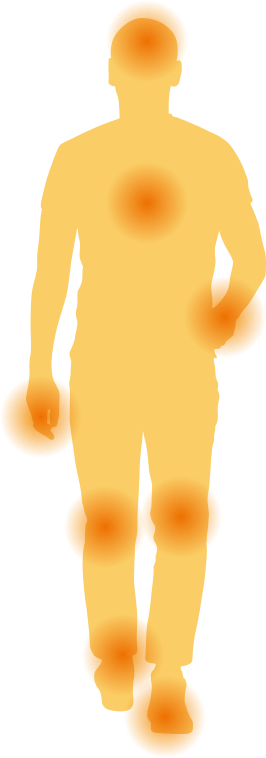
Understanding Rheumatoid Arthritis
Diagnosis
A rheumatoid arthritis diagnosis can be difficult to make at first, because early signs and symptoms may be similar to those of many other diseases. There is no single test that can definitively diagnose someone with RA.
For these reasons, it’s important to recognize the signs and symptoms and address them with a specialist trained to diagnose and treat rheumatoid arthritis. A rheumatologist will be familiar with the condition and will know how to confirm whether you have the disease and can determine how severe it is. Often the first step is performing a physical exam to check your joints for common rheumatoid arthritis symptoms (swelling, warmth, and redness), as well as reflexes, muscle strength, and overall function.
Rheumatoid Factor and Other Diagnostic Tests
One common rheumatoid arthritis test checks for high levels of rheumatoid factor (RF), an antibody present in the blood of many patients with rheumatoid arthritis.
To perform a rheumatoid factor test, your doctor will request a blood sample and measure the levels of rheumatoid factor in your system.
Overall, about 80% of people with rheumatoid arthritis test positive for RF.

What Your RF Test Results Mean
(–) Negative Result
- Little to no RF was found in your blood
- Does not mean you do not have RA or other health problems
- Some people with RA have little to no RF in their body
(+) Positive Result
- You have RF in your blood
- You are more likely to have a condition linked to rheumatoid factors, like RA
While there is a correlation between high rheumatoid factor levels and rheumatoid arthritis, a rheumatoid factor test can’t diagnose any health problems on its own. Other steps of the diagnostic process may include, but are not limited to:
- Checking for elevated erythrocyte sedimentation rate (ESR) or C-reactive protein (CRP), which indicate inflammation
- X-rays to help track the progression of RA
- MRI (magnetic resonance imaging) and ultrasound tests to determine the severity of RA
They went through a whole bevy of things they thought it might be: fibromyalgia, lupus... they finally performed [a rheumatoid factor] test and then went through a range-of-motion series. That’s when I was officially diagnosed with rheumatoid arthritis.
- Meg, CIMZIA patient Individual results may vary.
Collapse
More
Impact
Once it develops, RA is a lifelong condition. Living with RA can take a toll over time. Physically, joint symptoms can impact your ability to perform everyday activities and care for your family, while emotionally, you may not feel like participating in social activities or like you’re able to do your best at work. Talking to your rheumatologist can help you achieve better results in managing RA symptoms.
There are four stages of RA, with studies showing that, on average, people who are persistently RF-positive tend to suffer from more swollen joints than those who are persistently RF-negative. The four stages of RA are:
- Your symptoms may be limited to joint swelling that may make it painful to move them.
- Joint swelling typically worsens. Additionally, the increase in inflammation will begin deteriorating the cartilage in your joints.
- The loss of joint cartilage reaches a point where your bone becomes unprotected. Damage to your joints, including joint deformities, may now become visible on x-ray.
- Your RA has progressed to the point where your body has developed fibrous tissue and/or bones have fused, resulting in a loss of joint function.
With early detection and treatment, your RA can be managed. To help with your RA diagnosis, download our Doctor Discussion Guide to inform your next appointment with your rheumatologist. Through open conversation with your doctor about how symptoms are affecting you physically and emotionally, you can decide your best plan for treatment together.
There are so many different faces for RA, and it’s not relegated to one age group. If you are scared because of the information that you’ve read…have a conversation with your doctor. Take that opportunity; don’t let it pass you by. Because you have one life.
- Meg, CIMZIA patient Individual results may vary.
Collapse
More
Treatment
While there is no cure for RA, early recognition, diagnosis, and treatment are critical to getting your condition under control as early as possible.
Even though the progression of RA varies from person to person, for most people it can worsen over time and potentially require surgery if it isn’t managed properly. That’s why it’s so important to talk to your rheumatologist to fully understand the complexities of RA throughout your treatment experience.
CIMZIA® (certolizumab pegol), as a biologic injection for rheumatoid arthritis, may help people with moderately to severely active rheumatoid arthritis achieve results even when other treatment options haven't worked. Ask your rheumatologist how CIMZIA may work for you.

How to talk to your doctor about RA and rheumatoid factor (RF)
When it comes to the effectiveness of your RA treatment, your RF level may be playing more of a role than you realize. The next time you visit your rheumatologist, it may help to ask these 3 questions to get a better understanding of the relationship between your RF and RA:
- What is my RF level?
- How does RF affect my RA?
- Can RF levels affect my RA treatment?
Tips for rheumatoid arthritis treatment:

Exercise can help.
Exercise can help. Talk with your rheumatologist about creating an exercise plan that’s right for you.

Assistive devices may ease the stress on your joints.
Assistive devices may ease the stress on your joints. Ask your doctor for recommendations about tools and other items that can help you maintain your independence and stay active.

Support is available.
Support is available. For people prescribed CIMZIA, the CIMplicity® program is designed to help you start and stay on treatment with confidence.* For financial assistance options, refresher training on treatment, and more, enroll now.*
How to talk to your doctor about RA and rheumatoid factor (RF)
When it comes to the effectiveness of your RA treatment, your RF level may be playing more of a role than you realize. The next time you visit your rheumatologist, it may help to ask these 3 questions to get a better understanding of the relationship between your RF and RA:
- What is my RF level?
- How does RF affect my RA?
- Can RF levels affect my RA treatment?
Manage Your RA With Confidence
By keeping track of your symptoms, writing down any questions you have, and being open with your rheumatologist about what you’re experiencing, you can find the treatment that’s most appropriate for you, even if you’ve been on other RA treatments before.
To ensure a productive conversation at your next appointment, download our Doctor Discussion Guide.
*The CIMplicity program is provided as a service of UCB and is intended to support the appropriate use of CIMZIA. The CIMplicity program may be amended or canceled at any time without notice. Some program and eligibility restrictions may apply.
I would say RA is almost like an afterthought to me now.
- Diedra, CIMZIA patient Individual results may vary.
Collapse
More
Resources
CIMplicity® is a free program that provides support at each step of your experience when treating your RA with CIMZIA (certolizumab pegol). For more details, enroll now.*
The American College of Rheumatology works to advance rheumatology treatment through programs to improve care for people with rheumatic and musculoskeletal diseases and arthritis.
Working to advance the treatment of more than 100 types of arthritis and related conditions, the Arthritis Foundation also has a helpline available at 1-800-283-7800.
FORWARD is the largest patient-reported research data bank for rheumatic disorders in the United States. FORWARD works to improve treatment outcomes for people with rheumatic disorders.
The National Institute of Arthritis and Musculoskeletal and Skin Diseases supports research into the causes, treatment, and prevention of arthritis and of musculoskeletal and skin diseases.
*The CIMplicity program is provided as a service of UCB and is intended to support the appropriate use of CIMZIA. The CIMplicity program may be amended or canceled at any time without notice. Some program and eligibility restrictions may apply.
Collapse
More

Hear From
Real
CIMZIA Patients
Real
CIMZIA Patients
Get to know how patients with RA found relief and support with CIMZIA injections for rheumatoid arthritis.
Individual results may vary.
FAQ
How is rheumatoid arthritis diagnosed? Is there a rheumatoid arthritis test?
A rheumatologist will know where to look to confirm if you have RA, which is why it’s important to be open and honest with your doctor about all of your symptoms and the effect they have on your daily life. In addition to being aware of your symptoms, your doctor may also perform a blood test for rheumatoid arthritis to help confirm the diagnosis.
What are usually the first signs of rheumatoid arthritis?
Some of the early symptoms of RA include, but are not limited to, tender or swollen joints, joint stiffness in the early hours of the morning, and fatigue.
What are 3 common symptoms of rheumatoid arthritis?
Three common symptoms of RA are tender, warm, swollen joints; morning stiffness lasting over 30 minutes; and fatigue. Other parts of the body, including the skin, eyes, lungs, and heart, can also be affected.
Make sure to talk with your doctor about any symptoms you may be experiencing.
At what age is rheumatoid arthritis diagnosed?
The onset of rheumatoid arthritis usually occurs from the age of 35 to 60.
What is the main cause of rheumatoid arthritis?
While the main cause of RA is unknown, it is thought to develop from a combination of genetic and environmental factors. Symptom-wise, inflammation plays a key role in the stiffness and pain people with RA experience.
What are the risk factors for rheumatoid arthritis?
There are several factors that may increase your risk of RA:
- Women are more likely than men to develop RA
- Middle age is when RA typically develops, though it can occur at any age
- Family history of RA
- High rheumatoid factor (RF) in the body can lead to poorer prognoses
- Smoking
- Low vitamin D
- Obesity
What is rheumatoid factor?
Rheumatoid factor (RF) is an antibody inside your body. Normally, your immune system makes antibodies to attack germs that can make you sick. RFs, however, are antibodies that sometimes attack healthy cells and tissues by mistake. This can lead to RA symptoms like inflammation and joint pain/damage.
How does rheumatoid factor affect rheumatoid arthritis?
High levels of rheumatoid factor (RF) has been linked to more severe rheumatoid arthritis symptoms and, in some cases, has been shown to alter the effectiveness of some RA treatments.
If you have high RF and are experiencing worsening symptoms, you may want to speak to your doctor about your treatment options.
Where does rheumatoid arthritis usually start?
While your smaller joints (finger and toe joints) tend to be affected first at the onset of the disease, RA symptoms may spread to other parts of the body (lungs, eyes, or even the heart) as the disease progresses.
What are the 4 stages of rheumatoid arthritis?
The four stages of RA are:
Stage 1: Your symptoms may be limited to joint swelling that may make it painful to move them.
Stage 2: Joint swelling typically worsens. Additionally, the increase in inflammation will begin deteriorating the cartilage in your joints.
Stage 3: The loss of joint cartilage reaches a point where your bone becomes unprotected. Damage to your joints, including joint deformities, may now become visible on x-ray.
Stage 4: Your RA has progressed to the point where your body has developed fibrous tissue and/or bones have fused, resulting in a loss of joint function.
What is the difference between rheumatoid arthritis and psoriatic arthritis?
While both affect the joints, RA can affect both sides of the body equally. Psoriatic arthritis, however, typically involves one side of the body and is usually accompanied by plaque psoriasis.
Visit the psoriatic arthritis section of our site to learn more.
What is the difference between rheumatoid arthritis and osteoarthritis?
Though RA and osteoarthritis may share joint symptoms like pain and stiffness, the difference is the underlying cause. The inflammation of RA comes from the nature of it being an autoimmune condition. Osteoarthritis, on the other hand, is a condition caused by wear and tear on the joints and has no effect on the lungs or heart like RA.
Can rheumatoid arthritis be cured?
While there is currently no cure for RA, early recognition, diagnosis, and maintaining treatment are critical to getting this chronic disease under control as early as possible.
How do people live with rheumatoid arthritis?
Along with maintaining your treatment plan with a biologic medication like CIMZIA, some ways to adjust to living with RA include creating a plan with your rheumatologist that fits your needs. This can include using assistive items that can protect your joints and make activities easier to complete, and starting an exercise regimen. Talk to your doctor or rheumatologist for any recommendations they may have.